
In 1888 a Scotsman and an Englishman began to discuss the possibility of starting a Baptist church in Harlesden. From that conversation came a fellowship of 34 founding members, a chapel seating 800, and a witness that has carried unbroken for more than 135 years — through two world wars, an arson attack, the transformation of Harlesden from a leafy suburb to an inner-city industrial area, and the arrival of generations of new neighbours from the Caribbean, India, Africa, Brazil, Portugal and beyond. This is the story of that fellowship.
The notes that follow draw on three sources: the church's Centenary Booklet compiled by Brother Bruce Buckingham and B.J.B. in 1990, the 125th Anniversary Booklet written by Pastor Cornelius Mereweather-Thompson in 2015, and a working archive of scrapbook cuttings from the late 1920s and early 1930s. Few of the names in this account hold a prominent place in official records, but, in the words of the first historian of the church, "through their Christian service to their own generation they are known to God."
1888 – 1890The Vision
Harlesden in the 1880s was changing fast. Fifty years earlier it had been little more than a few houses around Harlesden Green on the road from Paddington to Harrow. The opening of Willesden Junction station in 1866 brought the railway, and the railway brought houses. By the late 1880s the new suburb had a Methodist church, Anglican churches and a Presbyterian church — but no Baptist church.
Two men changed that. Alexander Meiklejohn, a Scotsman, and William Whittle, an Englishman, were both engaged in Sunday School work at Willesden Presbyterian Church. As they came to know each other they discovered a shared conviction: that they belonged in a Baptist fellowship of their own. They wrote to neighbouring Baptist ministers, including Rev. W. Stott of Abbey Road, who was that year's President of the London Baptist Association (LBA). He pointed them to the next year's incoming President, Col. J.T. Griffin.
The beginning was not promising. A newspaper advertisement attracted only six replies. The first meeting drew no one at all. A second meeting attracted seven people. But on 27 December 1888 a well-attended meeting was held at Harlesden College in Bramshill Road, and a committee was formed: Col. Griffin as Chairman, Meiklejohn as Treasurer, Whittle as Secretary.
Events then moved quickly:
- 28 February 1889 — a site in Acton Lane was approved, leased from Col. Tubbs for 999 years.
- 9 April 1889 — at Victoria Road Chapel, Wandsworth, the LBA formally adopted the Harlesden scheme as its work for 1889.
- 28 April 1889 — public worship began in the Willesden High School (later the County Court building) in Craven Park.
- 27 July 1889 — a Sunday School followed, with 6 teachers and 13 children at its first meeting.
- November 1889 — building work began on Acton Lane.
- 6 March 1890 — the stone-laying took place.
- 8 May 1890 — the church fellowship was constituted with 34 members, Rev. J.T. Briscoe (the LBA President) presiding.
- 26 June 1890 — the building was opened. The afternoon preacher was Rev. F.B. Meyer.
The architect was Charles Bell and the builders Messrs. John Allen & Sons. The chapel cost £6,545 and was designed to seat 800. It still stands today. One vigorous underground spring that gave trouble during the building still flows along the floor of the cellar beneath the church.

A Pool That Has Outlasted Generations
One detail of the original building deserves a story of its own. The baptism pool installed when the church was built carries, in golden lettering around its marble surround, the words: "BURIED WITH CHRIST IN BAPTISM" — drawn from Romans 6:4. That same pool, in the same place, is still in use today.
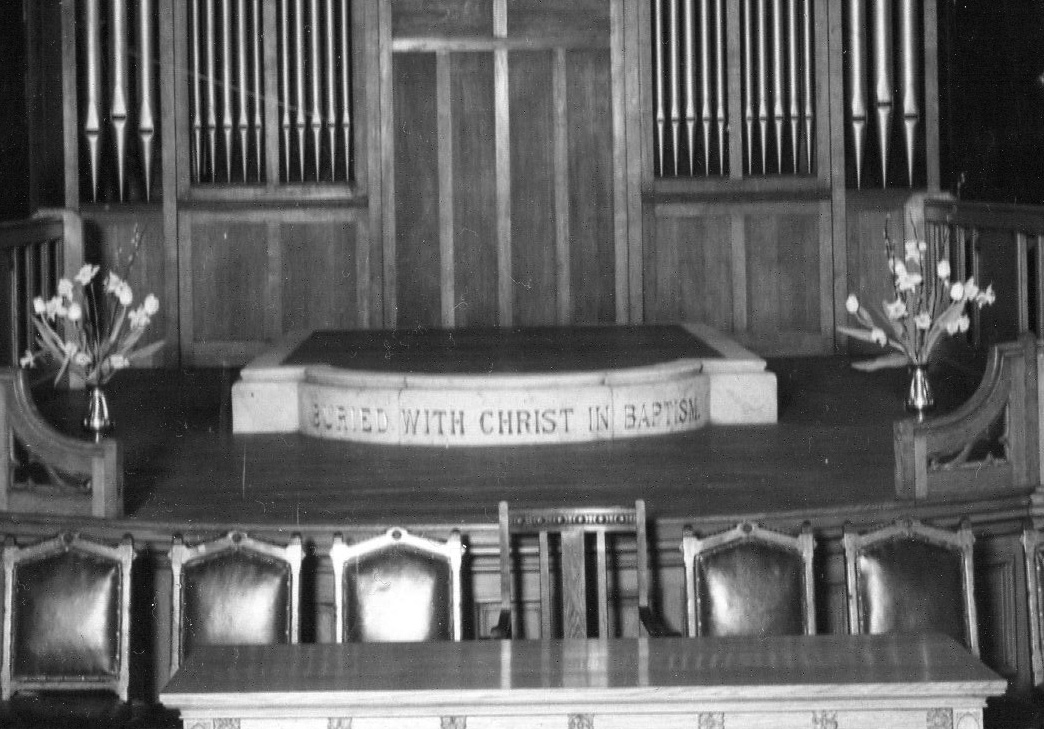

Every believer who has been baptised at Harlesden Baptist Church since 1890 has gone down into the same waters. Read more about believer's baptism at HBC, including how to be baptised here yourself.
1890 – 1894Getting Started
On 17 November 1891 the church called its first pastor: Rev. G.C. Williams, from Boston, USA, at a stipend of £250 per annum. Under his short ministry the first diaconate was elected on 2 March 1892 — Messrs. Balls, Chew, Herring, Luck, Meiklejohn and Whittle — and several of the institutions that would shape church life for decades took shape: the "Mayflower" Band of Hope (1892), a Young People's Society of Christian Endeavour (1893), a Young Men's Society holding open-air services in Harley Road (1893). Rev. Williams resigned on 19 December 1893, moving to Sion Chapel, Bradford.
1894 – 1914Settling Down — Twenty Years of Rev. Benjamin Thomas
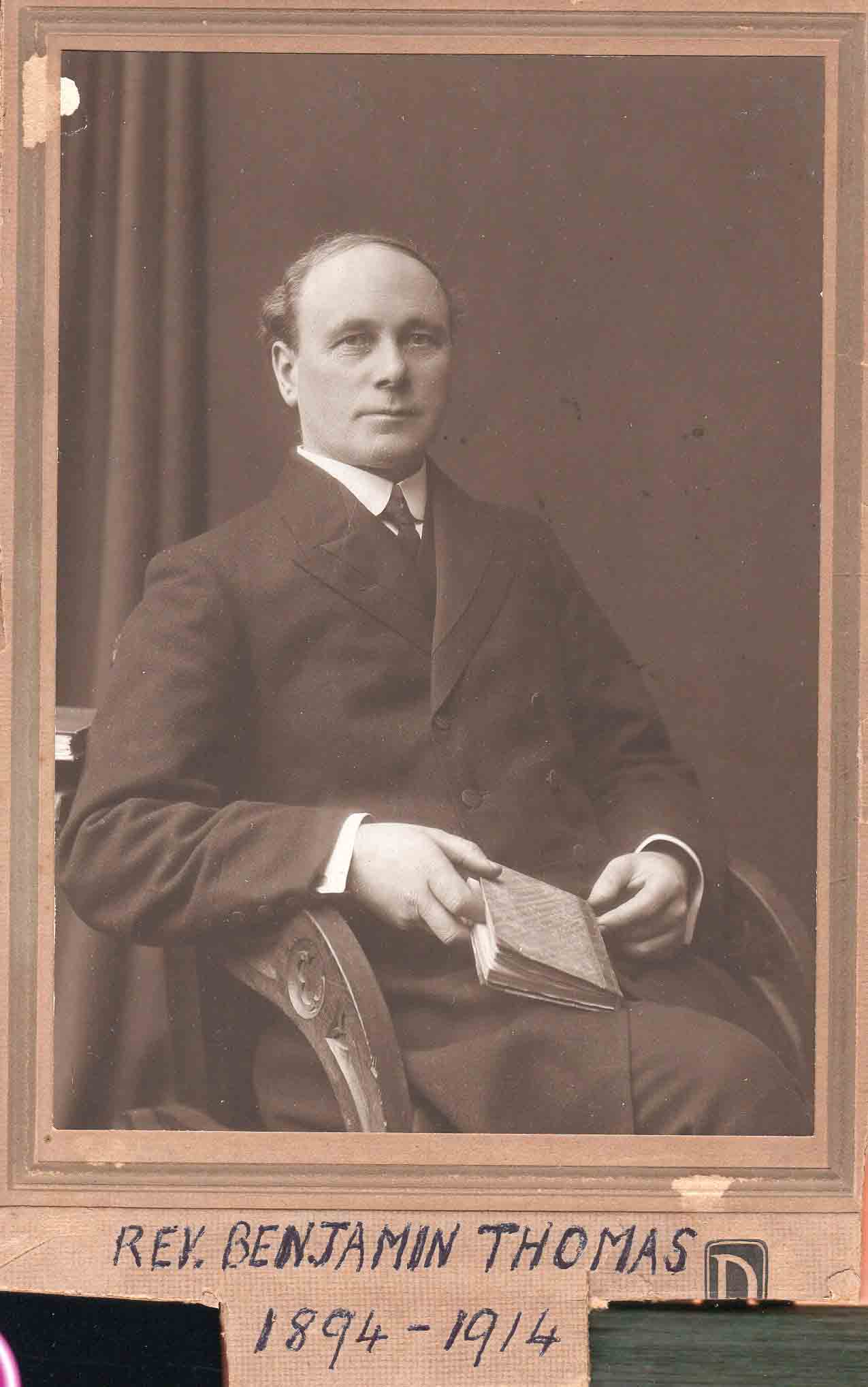
Minister 1894–1914
On 22 August 1894, Rev. Benjamin Thomas, of Newport, Monmouthshire, accepted the pastorate. He stayed for twenty years — the longest single ministry in the church's first half-century — and his name is woven through almost every record of the period.
The first church magazine appeared on 5 January 1895; a Literary and Social Guild met for the first time later that month; an auxiliary to the Baptist Missionary Society was formed; a Sunday morning prayer meeting at 10:15 began. A new organ was opened in February 1896 (cost: 180 guineas plus £100 for removal and reconstruction). The first annual supper for "about 200 poor persons" was held the same month. A Dorcas Society was formed in June to make clothes, especially for the poor. By the end of the century the church was sustaining a Sunday School Tea for 100 poor children, a Mothers' Medical Aid and Maternity Society, and a Christmas distribution of gifts to those in need.
The first co-founder did not see the new century through. Alexander Meiklejohn died on 24 January 1900, aged 63, and is commemorated by a marble plaque on the right side of the church.
Long-serving servants began to appear in the records. Mr Thomas Lockington was appointed Sunday School superintendent in December 1901 and went on to serve as deacon (1902–36) and finally as church secretary. William Mabbs became organist on 24 June 1903 and would hold that role for the next 43 years, in membership for over sixty. A "Men's Own" meeting on Sunday afternoons was started in 1904. The diaconate grew to 12 in March 1906.

The pastor himself was knocked down by a motor car on 23 April 1910, but escaped serious injury. Individual communion cups were introduced in February 1911. By August 1913 the deacons were holding urgent meetings about the church's finances and declining congregations. William Whittle, the other co-founder, died in early 1914, having played a part in many local Christian causes — among them the founding of Steele Road Mission in 1909, which would later become a daughter work of HBC.
Rev. Benjamin Thomas resigned in April 1914, four months before the outbreak of the First World War.
1915 – 1920The First World War
In January 1915 Rev. Donald MacLean began his ministry. He was an Australian, having worked in a bush mission in Western Australia, served as chaplain to commonwealth forces and edited the West Australia Baptist. Within two months a revision of the church roll reduced the membership from 303 to 218 — partly the natural effect of a thorough review, partly the harder reality that 72 men connected with the church were serving "King and Country" in the war.
In March 1916 Rev. MacLean himself was given leave of absence to act as a Forces' chaplain, and was absent for most of the next three years. The school rooms were used as an air-raid shelter from October 1917. He resigned in April 1919, shortly before the Peace Thanksgiving services in July.
The church secretary, William Thomas, a railwayman, died in April 1920. He had served from 1912 to 1920 and is commemorated by a plaque in the church vestibule.
1921 – 1931Rapid Growth Under Rev. E. F. Sutton
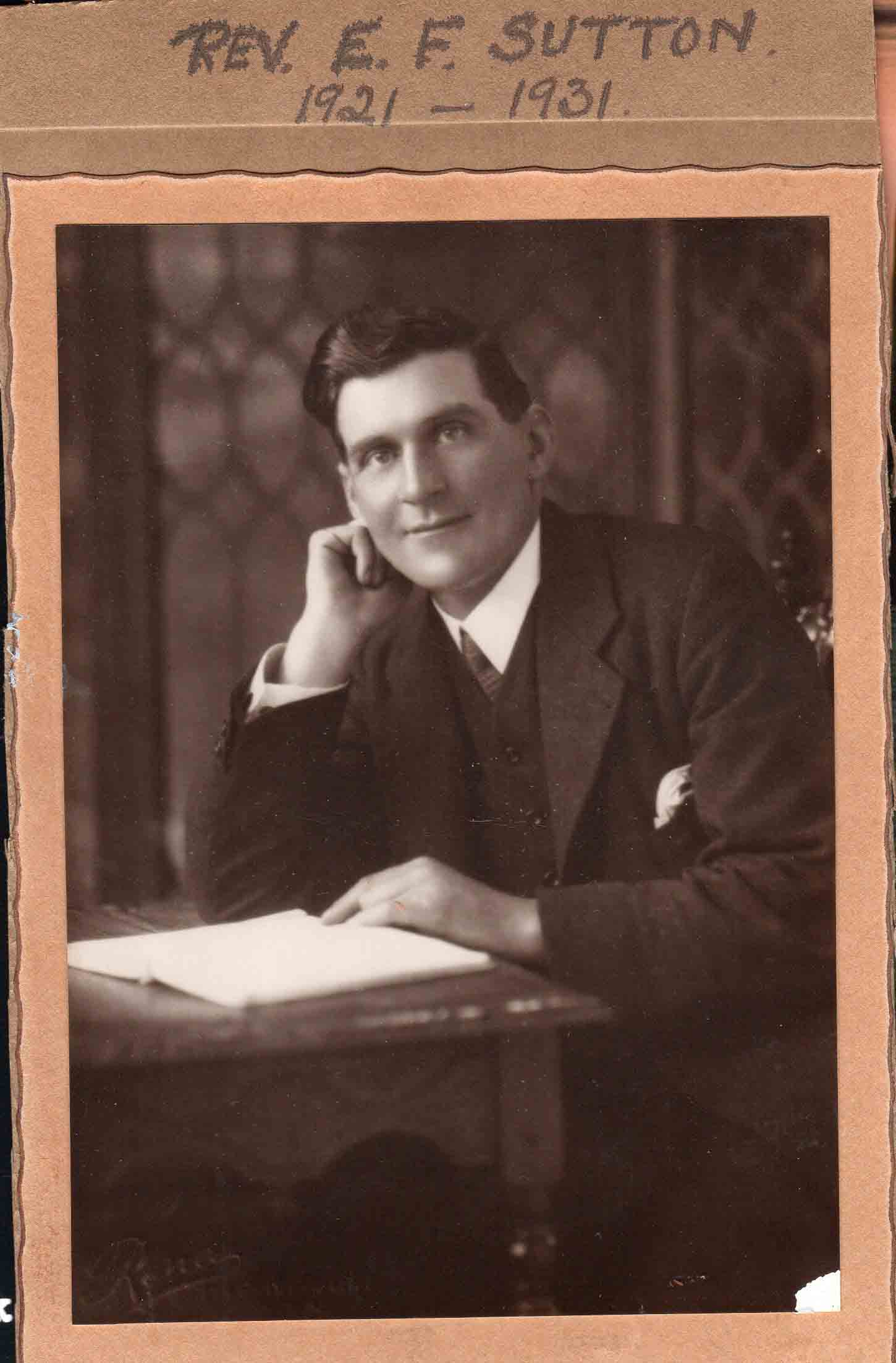
Minister 1921–1931
In January 1921 Rev. Ernest Frederick Sutton (1889–1967) began what would become a transformative decade. He had trained at Spurgeon's College from 1912 to 1914, served in the Army through the Great War, returned to college for a year, and then come to Harlesden. He was an energetic leader and a popular preacher. In his first year (1921) there were 45 baptisms. He married at Harlesden, and a son was born to him and Mrs Sutton at the Manse on 12 July (a fact the church magazine editor failed to record in the next issue, drawing a regretful editorial correction the month after: "All members and friends of the Church must have noticed a very serious omission… the Editor has been severely censured but remains quite unrepentant").
The work flourished. The 1st Harlesden Company of the Girls' Brigade was formed in June 1921 under Captain Miss Gladys Croft. A "Spiritual Executive" formed in 1922 to assist the pastor. Church rooms were named after Christian leaders in October 1922. A mission in Harlesden in October 1923 recorded 160 decisions for Christ. In April 1924, Unity Hall was opened, built by the minister and the members themselves. A Manse was purchased at 69 Craven Park in August 1927. At this period there was a choir of 40, a string orchestra and a brass band — the Pleasant Sunday Afternoon (PSA) meetings were one of the busiest things in the church's week.
By 1931 the church's debt had been cleared and its membership had reached its all-time peak.
Rev. Sutton resigned in August 1931, moving to Southampton. From the Manse, 69 Craven Park, he wrote his farewell letter to the church, thanking them for eleven years of comradeship and pointing to "a happy church, spiritual experience, a thriving Sunday School, young life, the church debt banished, and buildings renovated." After leaving Harlesden he served at Southampton, Teddington and Fulham Cross, and after retirement in 1954 acted as moderator for several churches. He returned to Harlesden often.
1933 – 1938Rev. A. C. Ashpool

Minister 1933–1938
After a brief interregnum, Rev. A. C. Ashpool began his ministry in September 1933. He had trained at Cardiff (1904–08), served in Cambridge and Leeds, acted as a Forces' chaplain (1916–18) until invalided home, and resumed ministry in 1921 at the Robert Hall Memorial Church in Leicester — where he was also padre to Leicester City Football Club. He accepted some financial sacrifice in coming to Harlesden and is remembered as "a fatherly kind of man."
The 1930s were a decade of gentle decline. The new suburbs of Wembley, Harrow and Ruislip drew members away. The numbers were no longer growing as they had under Sutton, but the work continued. In March 1935 a Young Life Campaign ran in Harlesden. In October 1935 Frank Wakelin, a church member, was sent off as a BMS missionary to India. A campaign led by Rev. Lionel Fletcher in February 1936 invigorated the congregation. Miss May Royston, in membership since 1915, took over as Captain of the Girls' Brigade and would lead it for the next thirteen years.
Rev. Ashpool resigned in June 1938.
1938 – 1947War, Absence, and Return — The Two Ministries of Rev. G. H. J. Blake
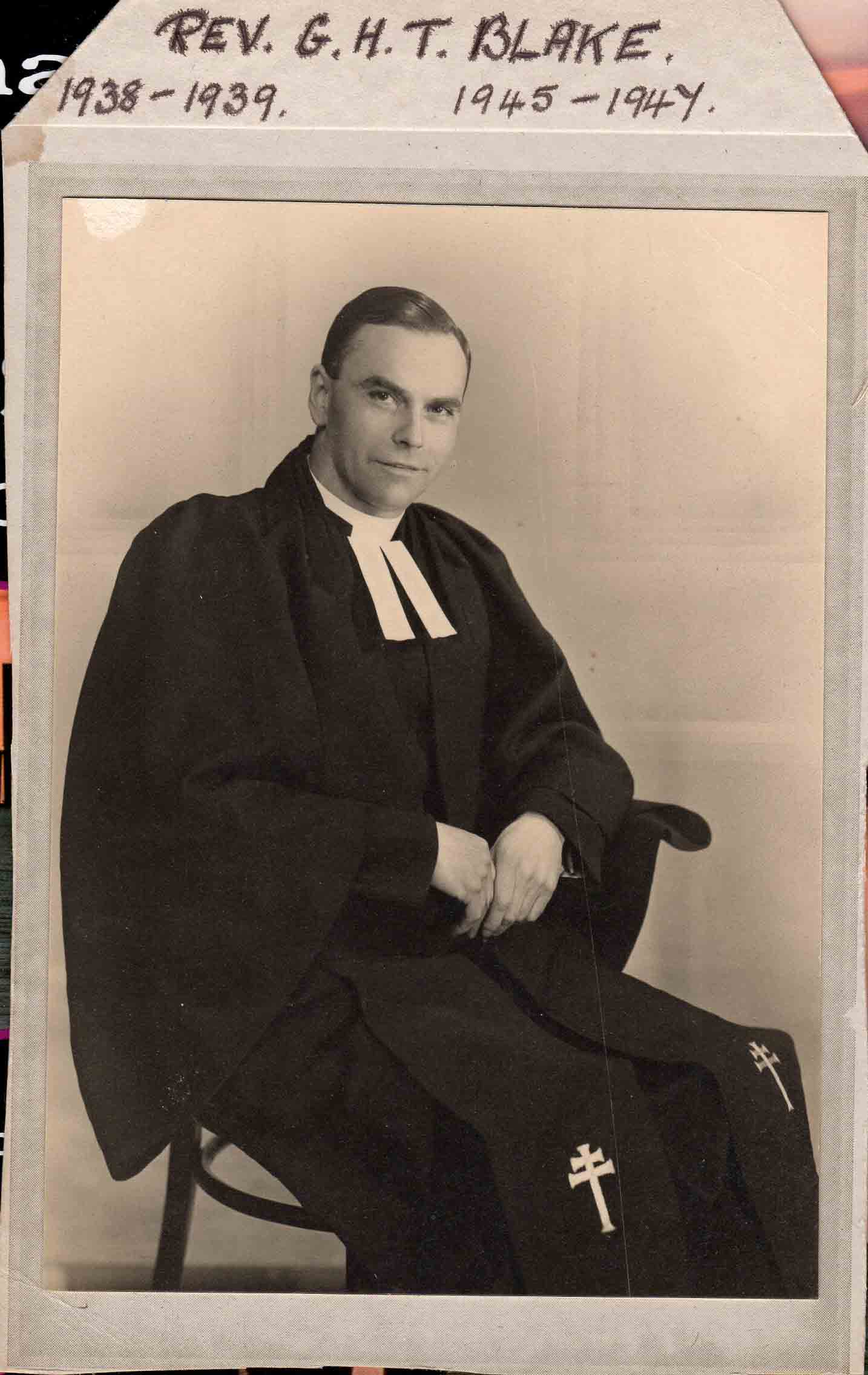
Minister 1938–1939, then 1945–1947
The dates beside Rev. Blake's name in the church's roll of ministers can puzzle a reader: 1938–1939 and then again 1945–1947, with a six-year gap between. The story behind that gap is the Second World War.
Rev. George H. J. Blake began his ministry in October 1938, the year of the Munich Agreement and the gathering storm in Europe. Less than a year later, an emergency church meeting was called on the outbreak of war in September 1939: the Pastor was being called up to act as a Forces' chaplain. The school rooms were turned into air-raid shelters. The children were evacuated. Evening services and weeknight meetings were suspended.
To keep the church going in his absence, Rev. E. Hemmes of Alperton was invited to give it oversight from November 1939. The fellowship celebrated its Golden Jubilee in 1940, the same year that nineteen high-explosive bombs fell on the borough of Brent between 7 October 1940 and 6 June 1941. The church building survived. In July 1943 the church took oversight of Steele Road Mission, with Harry Beasley (who would serve as a deacon for 45 years, 1923–68) as superintendent.
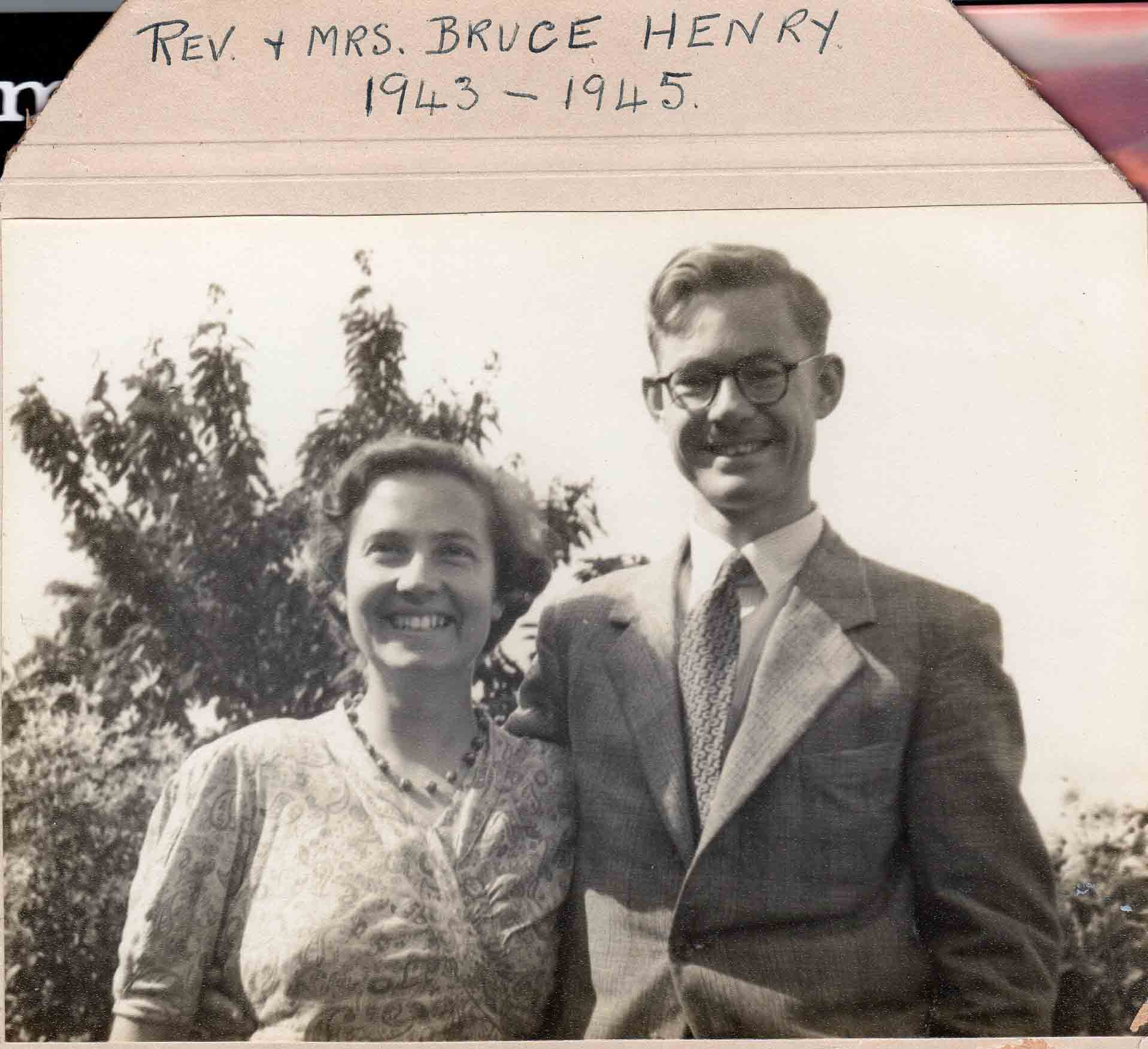
Acting minister 1943–1945
In September 1943, Rev. Bruce Henry began his ministry. He had originally trained for overseas missionary service, but the war prevented his travel to India. He served Harlesden as acting pastor for two years; despite the V1 and V2 attacks on London, the work was maintained. When the war ended in 1945 he was finally able to leave for the Kond Hills of India, where he worked for the next 22 years. The link he formed with Harlesden was maintained throughout: the church took a close interest in his mission and he revisited his former fellowship when he could.
In October 1945, Rev. George Blake resumed his Harlesden ministry, having seen out his war service. He had escaped from Dunkirk and served in North Africa. In June 1946 a new communion table was dedicated as the church's war memorial. After two further years he resigned again, in October 1947, to take up a chaplaincy in the Army.
1948 – 1959Post-War Reconstruction

Minister 1948–1954
In July 1948 a recognition service was held for Rev. W. A. Buchan, who came to Harlesden from Eastbourne. The air-raid shelters in Spurgeon and Carey Halls were removed and the halls re-opened the following July. Miss Hazel Ball, a church member, was accepted for missionary service with BMS in October 1950 (she later served in Angola). Mr Dimmock retired in November 1950 after 26 years as a deacon and 20 as church secretary. Rev. Buchan resigned in October 1954, joining the Church of England.
After Rev. Buchan, Rev. Peter Chevill served briefly (September 1957 to March 1959), followed in December 1959 by Rev. Tom Hooper. Under Rev. Hooper the dangerous top of the steeple was removed for safety reasons (the spire still forms a prominent Harlesden landmark today), and new heating and lighting plant was installed.
1960 – 1974A Changing World
From 1960 onward, the most important change in the life of the church was the arrival, in steadily growing numbers, of brothers and sisters from the West Indies. By 1970 about a third of members were of Caribbean origin; by the late 1980s about 80 of the 93 members. Augustus Small became the first West Indian deacon in March 1960. Jamaican Independence Sunday was celebrated in August 1964. An illuminated cross in the sanctuary, given anonymously in 1962, joined the new Baptist Hymnbook (1963) and the revived Carols by Candlelight (December 1963) in marking out a season of cautious renewal.
Rev. Hooper retired to Abergavenny in March 1966. In January 1967, Rev. Derek Taylor, trained at Regent's Park College, Oxford, began his ministry. He had served pastorates at Llandudno, Stourbridge and Cradley Heath, and at Harlesden was also chaplain to Central Middlesex Hospital and Secretary of the NW London group of the LBA. Steele Road Mission closed for redevelopment in 1967 and its youth work transferred to Harlesden, allowing the Boys' Brigade work to be restarted (23rd London company) with Mike Davy as captain. Rev. Taylor resigned in 1972, moving to Burton Latimer Baptist Church.
1975 – 1985The Joint Pastorate — Rev. Rodney Firmin

Minister 1975–1985
In 1975 Rev. Rodney Firmin began a ministry that would last a decade. He had served with the Baptist Missionary Society in Trinidad for ten years and in a pastorate at Kidderminster before coming to Harlesden. He also became the minister of Kensal Rise Baptist Tabernacle, and the two churches began to share many joint events, including the annual Harvest Supper. Rev. Gordon Mead, a probation officer, was appointed as supplementary minister within the joint pastorate (he moved from the area in December 1976).
The decade brought hard providences and quiet rebuildings. In June 1980 an arsonist started a fire in a cellar beneath the church, causing extensive damage. Services had to be held in Unity Hall for nearly a year. When the church re-opened in May 1981, the pews at the back of the sanctuary were not replaced, and new carpets were laid — leaving an open area that remains today. The preacher at the re-opening service was former member Rev. Norman Moon.
Frank Ambrose became assistant minister in January 1980. Through this decade caring-and-sharing groups were introduced into the membership, an annual "Rally of the Seasons" concert (arranged by Mrs Iris Simpson) became a fixture, and Saturday coffee mornings began. Rev. Firmin resigned in May 1985 to take up the pastorate of Aldershot Baptist Church. The final church parade of the 1st Harlesden Girls' Brigade — after 64 unbroken years — took place the same month.
1986 – 1995Rev. Eddie Larkman and the Centenary

Minister 1986–1995
After a year under the moderatorship of Rev. Desmond Gordon of Finchley, Rev. Eddie Larkman began his ministry in September 1986. He had come from Broadway Baptist Church on the Isle of Man, having trained at the London Bible College and served previously as pastor of Kilburn Evangelical Church. Early in 1987 his wife Sue was seriously ill for several months with cancer, but recovered, and in September 1989 their family grew to three with the arrival of their adopted daughter Rebecca.
In November 1988 the church hosted a Partnership Mission with a team from Nashville, Tennessee. In June 1989 the Men's Fellowship on Sunday afternoons was restarted. The membership in 1989 stood at 93, "covering members born in Jamaica, Barbados, India, the UK — and not forgetting the Isle of Man." The Centenary year 1990 was celebrated with reception, Gospel Concert, family service, evening worship, a Sunday School party, a Young People's barbecue, a church outing to Bournemouth, an anniversary Men's Fellowship gathering, and a Week of Meetings in September. The 100-year history typed up that summer by Brother Bruce Buckingham and B.J.B. is one of the principal sources of the account you have just read.
1995 – PresentRev. Dr. Cornelius Mereweather-Thompson
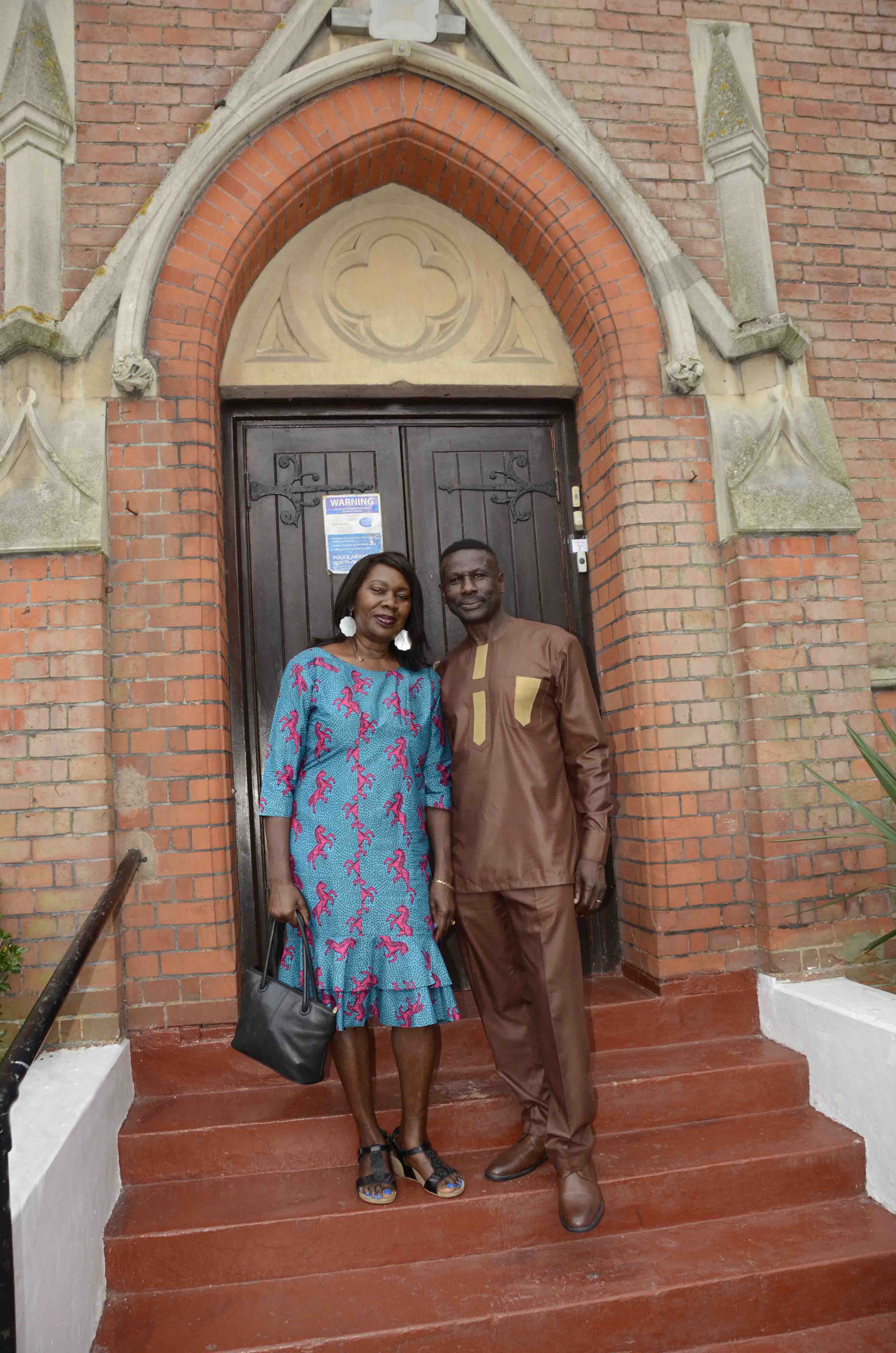
On 20 October 1995, Pastor Cornelius Mereweather-Thompson began his ministry at Harlesden Baptist Church. Before HBC he had served as joint-pastor, and then sole pastor, at Custom House Baptist Church in the East End of London. He is still the senior pastor of the church today.
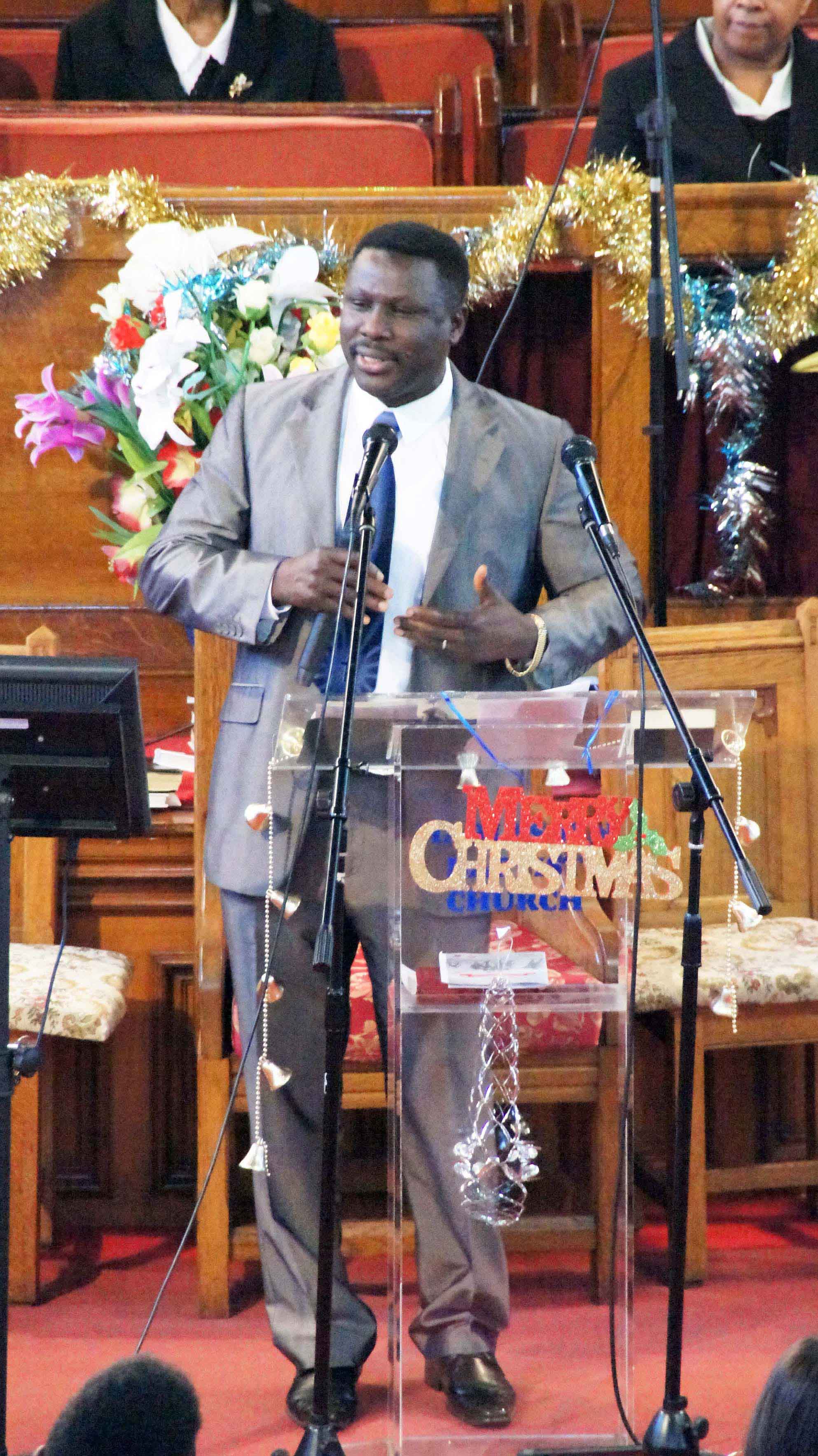
The Harlesden of his ministry is no longer the church the founders knew. The pews that once seated 800 now seat a smaller, more diverse congregation — predominantly Caribbean, with growing Brazilian, Portuguese, Somalian and African presence. The pipe organ still plays each Sunday, but is now accompanied by drums, guitar and keyboard. A large screen projects songs, readings and notices. A ramp at the front of the building has improved access for wheelchair users; the hall has been refurbished and new toilet facilities added; the heating system has been overhauled; the roof alone has cost over £90,000 to maintain.
The front platform of the sanctuary has been renewed too. Where the deacons' chairs once faced the congregation from either side of an exposed baptism pool, the platform now carries a single dignified bench across the back wall, with the pool tucked just behind it — the same pool, the same inscription, but no longer a constant visual feature except on baptismal Sundays.

In December 2014 the church began livestreaming services online. In July 2015 it celebrated its 125th anniversary, the same year the London Baptist Association celebrated its 150th. New ministries have grown up alongside the older ones: the Wednesday Group (now over 40 years old), the Rejoice praise-and-worship group, the Evangelistic Team, the Multi-Media team, the Visiting team, the Junior Choir, and a Youth Club for the wider community on Monday evenings. The pastoral ministry today is supported by the Diaconate — ten brothers and sisters elected by the congregation — together with the leaders of the church's many groups and teams.
Looking Forward
What of the next hundred years? In 1990, B.J.B. wrote that "it is as difficult to see what the next 100 years will bring as it was in 1890. But the promise which was true then is still true: 'Jesus Christ the same, yesterday, today and for ever.'" Twenty-five years later, in 2015, Pastor Mereweather-Thompson concluded his own history this way:
Onward ever, backward never! This should be our focus as we plan, train, pray and prepare for the church in the hereafter. Crowns and thrones may perish, kingdoms rise and wane, but the Church of Jesus constant will remain.
We continue, as those who first met at Harlesden College in 1888 also did, with no certainty about the future but with a settled conviction about the One whose church this is. To God alone be the glory.
Sources: Harlesden Baptist Church Centenary Celebrations, June–July 1990 (compiled by Brother Bruce Buckingham and B.J.B., drawing on the reminiscences of former treasurer Eddie Gooch and the church minute books); Harlesden Baptist Church 125th Anniversary, 1890–2015 by Dr. Cornelius Mereweather-Thompson (Fidelia Publishers, 2015); and the church's archive of scrapbook cuttings, 1926–1932. Photographs of former ministers, the sanctuary and the baptism pool are reproduced from the church's archive.